

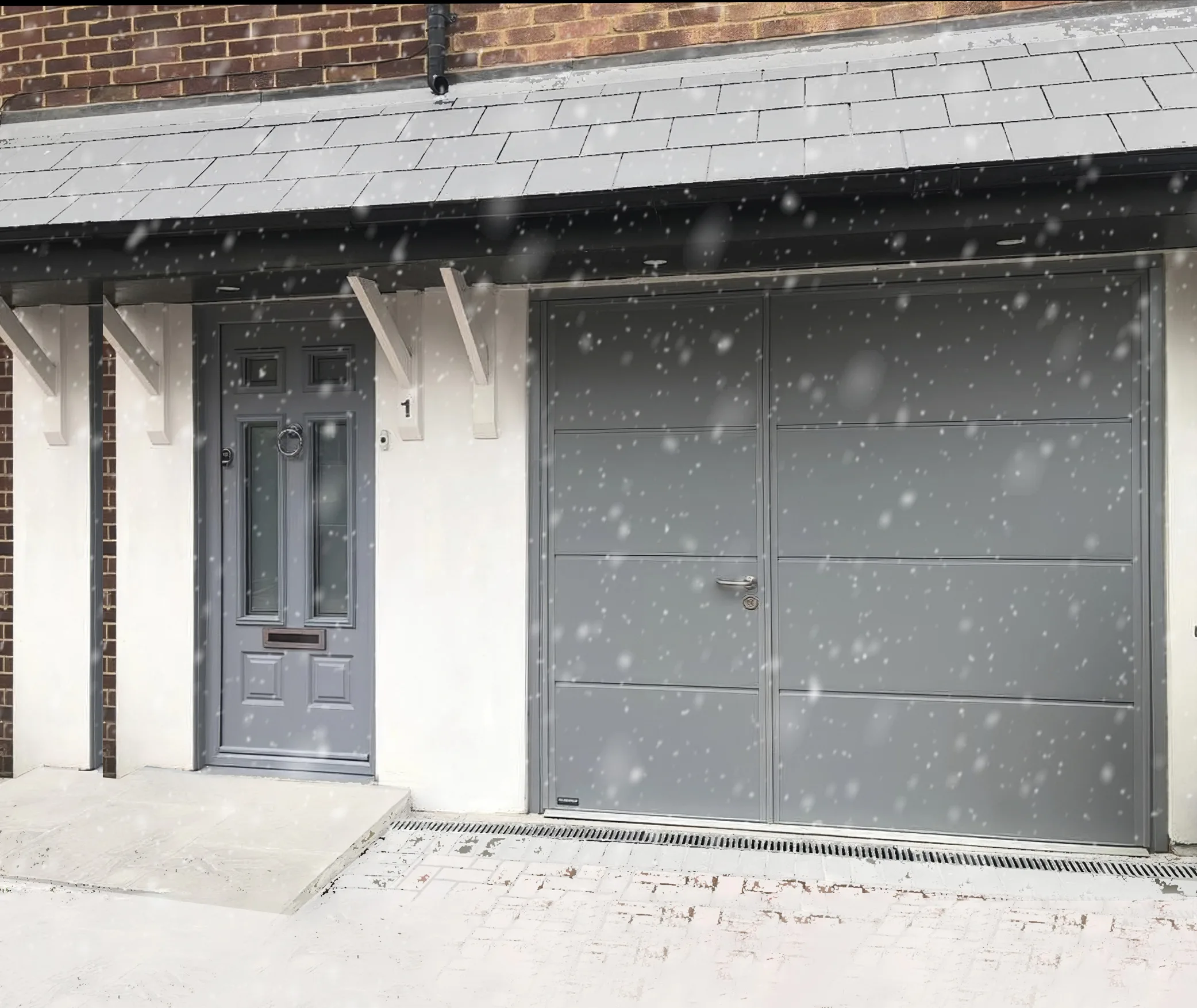
How Insulated Garage Doors Can Help Reduce Energy Bills
Why does insulation matter?
Older garage doors leak energy. They are rarely insulated and often have gaps around the door and frame that allow heat to escape and draughts, dust and debris to get in.
Modern insulated garage doors tackle both weaknesses by significantly reducing energy loss with insulation and much-improved sealing.

When does insulation make sense?
If your garage is separate from your home and you use it for parking your car or storing a lawnmower, bikes or life’s bits and bobs, then keeping the space warm is not a priority. It’s a different story if your garage is integral to your house, perhaps under a bedroom or adjacent to a living space. If you use your garage space as an extension of your home, perhaps as a workroom, home gym or office, or to store items that would deteriorate with frequent temperature fluctuations, you’ll want to keep the space warm enough for comfort. Achieving a comfortable temperature means heating the garage space and the less energy needed to keep things cosy, the lower your energy costs.
Even with good insulation in floors and walls, a cold garage can drain heat away from a bedroom above the garage or room linked to the garage. An insulated garage door will help stabilise the garage temperature and minimise the heating needed to warm the space.
What is insulation?
Obviously, it slows the passage of heat. How effective things insulate is where things need more of an explanation! You’ll often see insulation given a numerical value, called a ‘U’ Value. The U doesn’t stand for a word; it’s the scientific value that signifies heat transmission. Low U values signify good insulation (low heat transmission), the higher the number the less effective the insulation. As an example, cavity walls without insulation have a typical U-value of 1.50, whilst insulated cavity walls have a typical U-value of 0.25 to 0.30. A window with single glazing typically has a U-value of 4.80 to 5.80.
To give an idea of the impact on heat loss, a single-glazed window is 220% worse at preventing energy loss than an insulated cavity wall. Conversely, the insulated wall represents a 95% reduction in heat loss compared to the window. That’s a whopping difference when you think about what that means for the cost of heating a garage space – you want a garage door that is more like an insulated cavity wall than a single glazed window!
The good news!
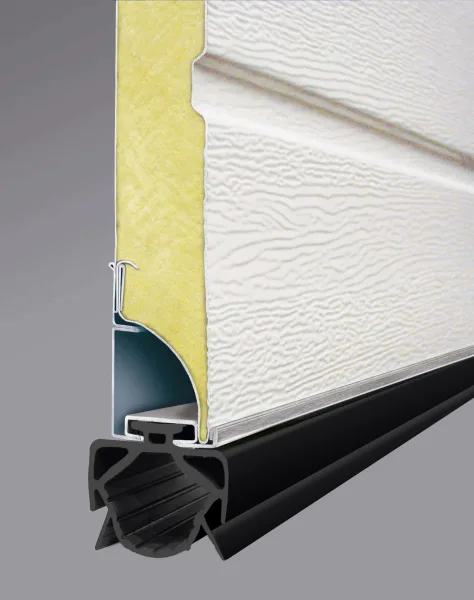
Insulated garage doors, such as those manufactured by Teckentrup and supplied by Tower Garage Doors, have excellent U values. Teckentrup insulated sectional garage doors have a U-value of 1.38, and Teckentrup insulated side-hinged garage doors have a U-value of 2.20. They achieve this with 40mm thick insulated panels and all-round weather seals between the door leaves and the frame. Compare this to a typical up-and-over garage door with a U-value of around 7.00 and an insulated roller garage door with a typical U-value of 5.20. The potential savings in energy costs from well-insulated garage doors, compared to less insulated or uninsulated ones, soon add up.
Better sealing brings other benefits too
Improved sealing also helps keep dust and debris out of your garage – exactly what you need if you’re using the space regularly and don’t want grime finding its way in!
Pay-back in no time
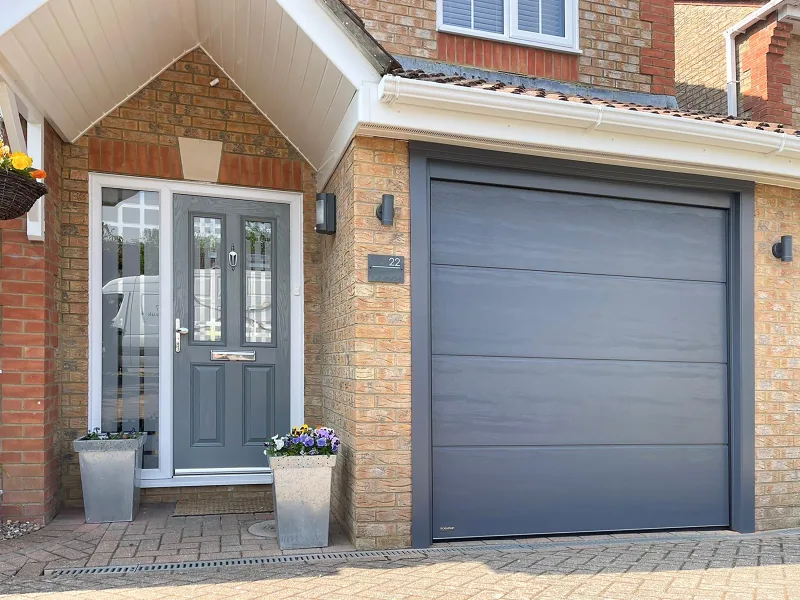
You’ll find that, whilst Teckentrup insulated garage doors require a slightly higher initial investment than low-performing doors, they quickly recoup the additional cost through energy savings and keep on saving you money. It’s an easy choice to make when, in return, you get a pleasant environment at a much lower energy cost!
Get in touch with us today for a free, no-obligation quote and begin upgrading your home!
Latest Tips

Which Garage Doors Are Most Suitable For My Home?
What to Know Before Buying a New Garage Door
Areas We Cover
5 Benefits of Roller Garage Doors

Instant Online Quote
Get a Free
Online Quote
Open and honest pricing for our full range of products
Get a Quote